

Interview and Edits by: Kendahl Plank
Updated: 2/1/2026
For Black History Month, we sat down with Kwinlyn Tyler, Community Affairs Manager at the Toledo Area Regional Transit Authority. Through her work at TARTA, Tyler helps shape a transit system that connects people to opportunity, community, and everyday life across Toledo.
In this conversation, she reflects on the deep ties between public transit and Black history, why access and equity matter, and how transportation can open doors to jobs, culture, and connection. Her perspective offers a meaningful look at why transit is about more than getting from place to place.

Kwinlyn Tyler is the Community Affairs Manager at the Toledo Area Regional Transit Authority. Originally from North Carolina, she moved to Toledo after college for what she planned to be a short break before graduate school, but the city quickly became home. After working at the county, she joined TARTA, aligning her career with a long-standing passion for public transit.
Her connection to transit is personal. While attending the University of Hawaii, Tyler relied entirely on the bus system, which allowed her to navigate the island and engage with the community without a car. That experience echoed her childhood, when her grandmother, who did not drive, depended on public transit to get around. Those experiences shaped her understanding of how essential reliable transit is to daily life.
Through her work at TARTA, Tyler advocates for transportation as a tool for access and quality of life. She brings firsthand insight into how public transit supports people who do not drive and helps connect residents to jobs, services, and their community.
Q: What are you most passionate about in your role at TARTA, especially when it comes to accessibility and equity?
“When I first moved here, I saw that there was a public transportation system. So I was like, ‘great, I know how to ride the bus’. That was in 2016 and I realized, oh, it’s not quite the same as the public transit I came from.
So having that experience of living here for three months without a car and accessing public transit that was maybe not as accessible as the system I came from, and now having the opportunity to shape what that looks like for other people.
I think about that every day in my work, how are we responding to the community? What can I do in my role to make maybe someone like me, eight years ago, have better access to the city, right?
Q: How do you do that, through your role as Community Affairs Manager?
“I think the biggest part of my role is just connecting with the community at large. TARTA has had a big renaissance in the last few years, and I don’t think the community really recognizes or can see everything that’s going on.
So part of my job is just to tell that story of what the TARTA of today looks like. That is the same for not just the general public, but also for our partners who have long thought of TARTA as like, ‘oh, it’s the bus, but it doesn’t really go many places’. How am I telling that story to all different types of people, our businesses, our leaders, our decision makers, our drivers and shakers.
That’s the first part of it. And second is, how am I making TARTA a cornerstone of the community and an institution that people can not only utilize, but trust, even if you’re not a user of TARTA, I want to trust that, if you ever had to use us, that you already know something about our services, you feel comfortable, right? You trust us to get you there reliably.”
Q: When thinking about Black History Month, what rises to the top for you personally? Are there moments, stories, or themes that feel especially connected to your work and your lived experience in Toledo?
“For me, public transit is a great equalizer. It not only provides access to transportation, it provides economic mobility in a real way. And when I think about it within the context of Black History Month, you know, the Montgomery bus boycotts are a cornerstone of American history and the civil rights movement.
I think about all the folks who fought for the right to not just ride the bus, but access it in an equal way. But I also recognize that, like me, having this position and being able to do what I do in transit, I stand on the shoulders of others. Their work, their lives have have really shaped my opportunities as a young black professional.
I think about, how can I continue to not only make the service better, but also more equitable. Because there’s all these little inequalities that we don’t see every day. During Black History Month, I think about that, and how it frames a lot of what we do, and even my personal opportunities.”
Q: You described public transit as an economic equalizer. Transportation shapes how people move through and experience a city, but it also determines access to jobs, education, health care, and daily necessities. Can you talk more specifically about how public transit impacts the Black community in Toledo, and the role it plays in creating more equitable access and opportunities?
“Let’s take Toledo for example. Historically, the cities were all compacted, and everyone lived within their communities. Within the city, everything was pretty walkable or accessible. And as we’ve started to spread out, those opportunities have begun moving out into the suburban areas. So that has divided what have been historically Black neighborhoods from places of commerce.
A lot of our great manufacturing and jobs are a little further out from most people. You may live in your grandmother’s house on the south side of Toledo, but you work all the way on the west side or out in Perrysburg, because there’s greater opportunity.
So how do we connect people to parts of their community that they’ve been cut off from. That historically would have been something they could easily access, but maybe now is something that’s a little further.
This also gives people the opportunity to come into communities that they wouldn’t have otherwise. Like when you hop on the bus, say, going downtown to West Toledo, for example, the bus is not going to take the most direct route. It’s going to take you through places and connect you to people that you wouldn’t have otherwise been. I think particularly when we think about the rich history of Toledo and historically, what some of our neighborhoods have been versus what they are today. The bus helps to connect and thread all of those things together.”
Q: Public transit has played a powerful role in Black American history, from Rosa Parks to broader civil rights efforts. When you think about Black History Month, how does that legacy connect to the work you do today?
“Rosa Parks Day is something that’s nationally recognized on February 4. It’s also known as Transit Equity Day, which I think really speaks to how powerful transit is within that equity conversation, and what it has done historically.
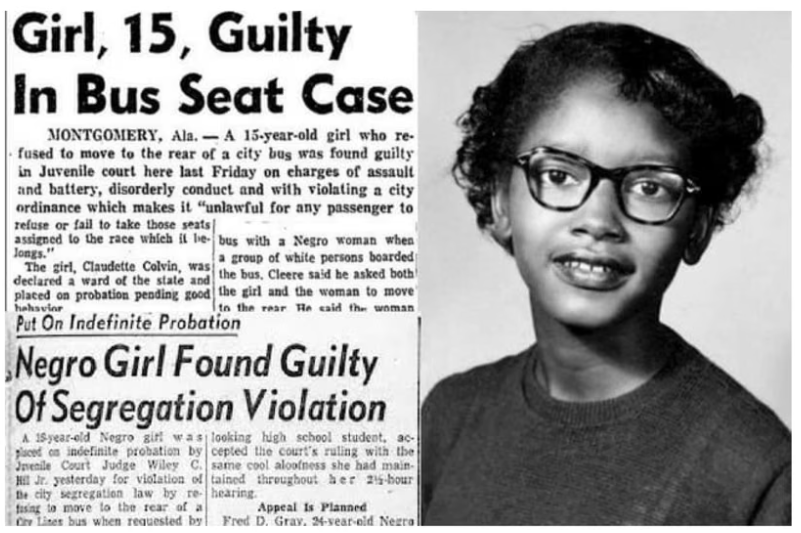
Going back all the way to Claudette Colvin, who was actually the first person to be arrested prior to Rosa Parks. She was 15 at the time and pregnant so she didn’t want to give up her seat to someone. And that sparked Rosa Parks and the NAACP to say ‘we’re going to build an entire movement around this in Montgomery’.
That one action by one girl who was just probably pregnant and tired, sparked this national movement, and the fact that they chose transit as the major stage for that movement, speaks volumes.
The reason the bus boycott was so successful is not just because Black people weren’t riding the bus, it’s because it economically crippled Montgomery by them not utilizing the service. They weren’t just people trying to get back and forth, these were the people holding up the economy in that town. We think sometimes transit is more of a luxury than a need. But the reason why the bus boycott was such a crux of the changing tides in the civil rights movement is because of that economic factor.
As we think about why that’s so important nationally, take a look at Toledo. About 60% of our customers self identify that they use TARTA to get back and forth to work. What would it mean, if TARTA were to disappear, or service were to slow down even a little bit, for all of our employers in our county or our region of the state.
Transportation is so important and beyond connecting people to their jobs, they’re also able to connect to each other. Something as simple as driving across town to visit your mom on a Sunday for dinner. Without a car, that becomes impossible. We lose those personal connections when transit doesn’t work for us.”
Q: How do you see public transit opening doors for residents and visitors to engage with Toledo’s culture, events, and attractions?
“You think about it with any major city, transit is a major part of their tourism. When you think about visiting New York City, you think about the subway. You can go everywhere for the low cost of public transit.
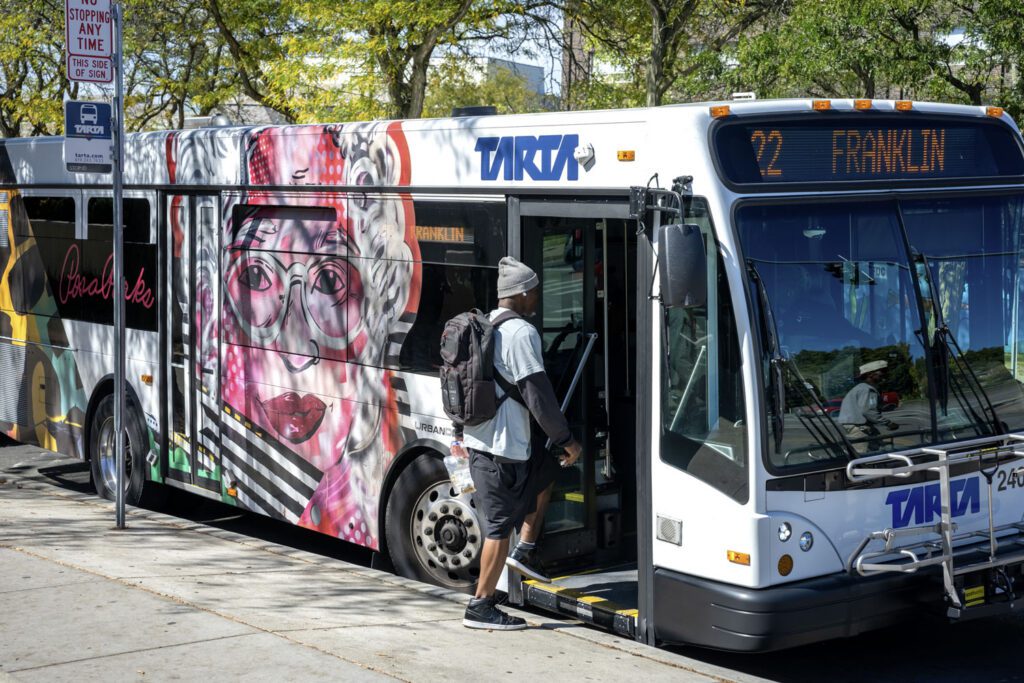
Transit offers you an opportunity to visit places off the beaten path. You can catch all of our lines at the downtown Toledo hub, hop on a bus and go through our neighborhoods. You can experience our local art scene through transit. You can experience those mom and pop restaurants that everybody’s hunting down just by hopping on your local transit.
It also provides an affordable way for people to view our city and and be tourists here. A lot of times, people want to visit places, but maybe money is a barrier. Leave the rental car at home, stay in downtown Toledo, hop on the bus. It goes everywhere, right? It offers folks opportunity who are not from here, to experience our city in a real way. And whether you have your own personal vehicle or not, you can still come and visit Toledo and experience everything and really get to know us. And transit is such a big part of that.
Ohio Department of Transportation is about to launch GoBus, which will connect us to Cincinnati, Columbus, and Cleveland. It’ll basically do a route of the state, and we’ll have GoBus pulling off right from the TARTA transit hub. So it’s really easy for people to come into the city, hop on a bus and go wherever they like to and I think that’s such a such a cool thing that we get to experience.”
Q: For visitors and locals who want to be more thoughtful during Black History Month, how would you suggest they engage with Black history, culture, and Black-owned businesses in ways that feel meaningful and lasting, not just seasonal?
“You all at Destination Toledo do an excellent job about putting out what events are coming up all over town, not just downtown, but like all over Toledo. So I definitely also look at all of the social media see what’s going on during the weekends.
So I recommend that, but also there are some great local people who are doing community promotion, like Fletcher Word at The Truth. They always have good coverage of, what’s coming up, what new things are opening and I think it’s also being plugged in to places and to people who are already deeply embedded within the community here locally.
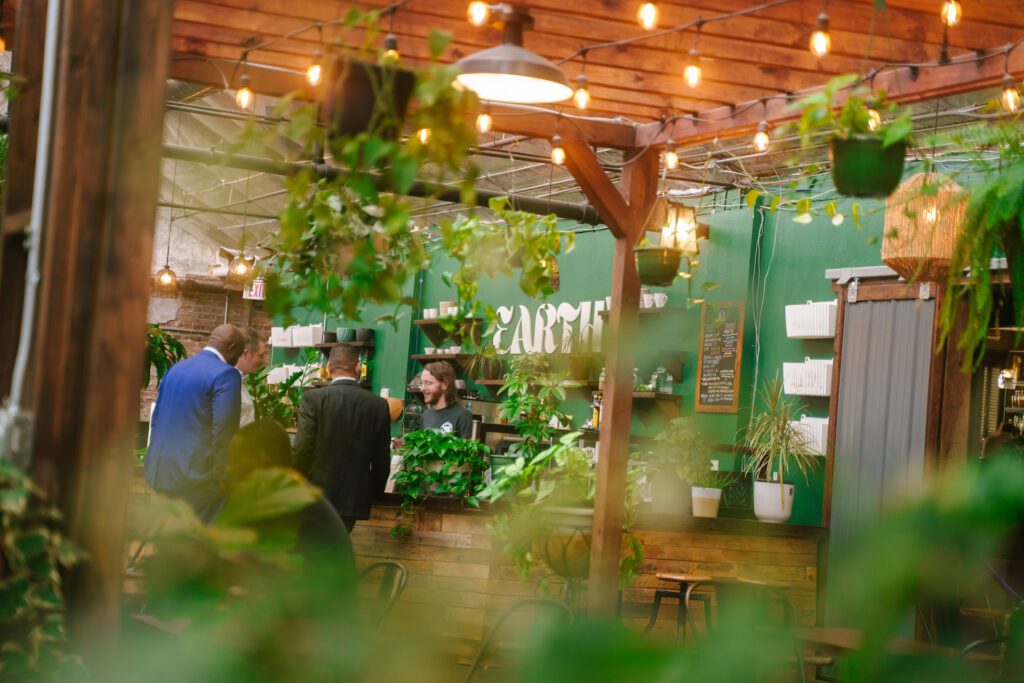
I think about gathering places like here at Earth, where they they host a lot of things and inside Lucille’s Jazz Lounge. Toledo has a lot of great jazz, check out the peacock cafe! Is a great place to gather and meet with people.
Word of mouth is still a big thing around here in Toledo. So like plug into your local community pages. Attend an event that’s hosted by a black organization or in a black space. Sign up for their mailing list. I promise they will contact you. But it’s a it’s a great way to learn about what’s going on here.”
Q: What are some of your favorite black owned businesses in Toledo?
“If we’re thinking about like nightlife, I really do love the Peacock Cafe. If we’re thinking about a great place for coffee and just like a casual place to work and hang, Earth Coffeehouse & Cafe. I have a couple of favorite restaurants around town. J’maes is always a big one for me…I do love Luxe Prive’s Saturday brunch. They do a mimosa tower…it’s ridiculous. There’s something about their catfish and salmon bites, I’m pretty sure, whatever’s in that secret sauce I’m addicted to.”


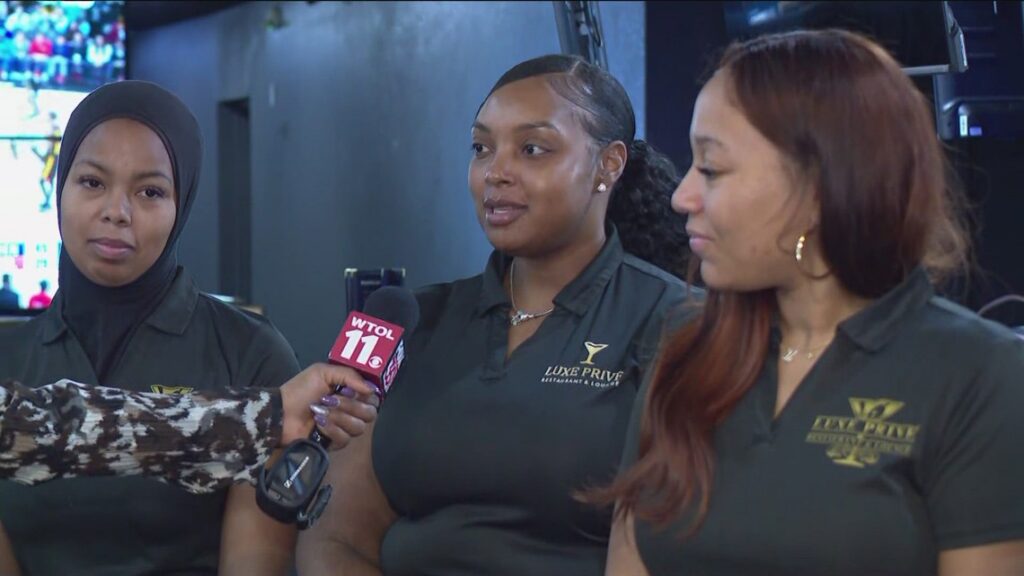
Photos provided by TARTA, The Guardian, The Blade, Earth Coffeehouse & Cafe, Toledo City Paper, and WTOL
Follow these links to read more Stories of Black Toledoans and to learn more about Black Owned Businesses in Toledo.